Showing posts with label Calendar. Show all posts
How About A New Calendar?
NPR News: Listening Activity
1.Pre-Listening
Task
Discuss the following questions.
|
VOCABULARY:
Read the seven examples below. Find the meaning of the underlined terms
in the chart:
1. When we were kids, in winter, we were bundled
up in clothes.
2. The crowds hailed the soccer champions.
3. Our math teacher demands accuracy
in all problem details.
4. The house needs cleaning. We can’t live in this messiness.
5. After the storm we saw a couple of boats drifting away.
6. It’s hard to follow a diet and be on track when everybody
around is eating fast food and pastries.
7. I like how the garden looks so much streamlined now. It seemed
a rainforest before.
|
1. Bundled
|
a. Disorder, confusion.
|
|
2. Hailed
|
b.Without
a specific route or order; carried away.
|
|
3. Accuracy
|
c. Put
together, tied up like a package.
|
|
4. Messiness
|
d.
Following the right course or route.
|
|
5. Drifting
|
e. Saluted, recognized.
|
|
6. On track
|
f. Precision, correctness.
|
|
7. Streamlined
|
g.
Simplified; without anything unnecessary.
|
2.Listening Task
Scientists at
John Hopkins University think they can come up with a better system for an
improved calendar.
|
Complete each of the sentences with the words given. Then, listen to the
news audio to check your work.
- Four hundred and 30 years ......, Pope Gregory XIII ...... the West a calendar, which ...... 365 days into what ...... to be ...... a year.
( called – gave
– divided – ago - was )
- ...... 12 months ...... seven days bundled ...... so-called weeks, the Gregorian calendar was hailed ...... a marvel ...... medieval accuracy.
( into – with –
and -
of - as )
- We use it ......, despite its ...... messiness - drifting ......, leap ...... and 28-day .......
(
days – months – today – years - occasional )
- But now ...... researchers at Johns Hopkins University have devised a different ...... to count ...... days with a leap week ...... few years to keep the calendar on .......
(
every – track - some – our - way )
- Holidays, ...... Christmas and New Year's Day, would always ...... on a Sunday. It ...... neat and streamlined for our modern ......, ...... maybe to those of us who work on Sundays.
( fall – seems
– like – except - age )
A Year’s Worth Of Idioms
Vocabulary Activity
The following is
a list of idioms with days, months, and
related calendar terms.
A Monday
morning quarterback : someone who says how an event or problem should
have been solved after other people have already dealt with it.
A person Friday
(or man/girl Friday): a person who does not very interesting work in an
office. Man Friday is the servant in the book Robinson Crusoe by Daniel Defoe.
April showers
bring May flowers: A proverb
meaning that although rain in April is annoying, it starts the flowers growing.
A red-letter
day:
a day that is very important or very special.
Day in day
out/ every other day: On alternative
days. Also weeks/ years.
Days/ weeks/
months / years running: Consecutive. Days, weeks, months or years in a
series.
From here till
next Tuesday: for a great distance; for a long time.
Get the day off: have a day
without working.
Have a face
like a wet weekend: to look very unhappy.
Have seen
better days: to be in bad condition.
In a month of
Sundays : for a long time.
In one's Sunday
best: in one's best clothes; in the clothes one wears to church.
Let’s call it a
day:
end the day's work; finish working for the day.
March comes in
like a lion, and goes out like a lamb: A proverb explaining that the
month of March usually starts with cold, unpleasant weather, but ends mild and
pleasant.
Nine days'
wonder: something that is of interest
to people only for a short time.
Slow as
molasses in January / slower than molasses in January : very
slow-moving.
Sunday driver: a slow driver
who appears to enjoy the view, holding up traffic.
That Monday
morning feeling : unhappy that the weekend has finished and you have to go back to work.
The dog days of
summer: The hottest days of the summer
season.
The flavour of
the month : someone or something that has
suddenly become very popular, but may not remain so for long.
Up to date : modern and
trendy.
Use terms from the idiom list to complete
the sentences below:
- A snowstorm one week and warm weather the next. This year, March really is ....
- Dad spends all weekend watching TV. It'll be ... when he decides to do some exercise.
- Many people complain about all the rain this week but it’s good to remember that April showers ...
- The traffic on the way to the restaurant was slower than ...
- I haven't seen you ...! We should get together more often.
- Costume parties are suddenly ... of the month. I can’t wait until they are finally over.
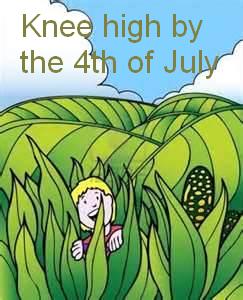
- The crops look good this year. It must be all the rain. They are going to be knee high ...
- You can repeat that from ..., but he won't listen.
- He's had a face like ... all day.
- It’s nice that he always is in his ... whenever he goes out for dinner.
- It’s 9 PM, let’s ... and go home already.
- It's easy to be a ... when you see results were not great. Criticizing the work of others now is really bad.
- Your look is very .... Do you follow fashion and trends?
- I’m a bit frustrated today but I guess it's just that .... It goes away by Tuesday.
- I need to ... tomorrow to get some medical tests done.
- The day I graduated was a real ... for my family and myself.
- We try to eat salads and fresh fruit during the .... Nobody feels like cooking in this heat.
- I go jogging ... because if I do it everyday I get bored.
- My old PC has ..., but at least it's still working.
- The scandal with Bob and David was a .... Now people never mention it.
- The bulletin board ad said, '... required for general office duties'.
- I don’t like to go fast, I'm a .... Sorry.
- I’ve been on a liquid diet for three .... I can’t wait to eat some solid food again.
Ancient & Modern Calendars
Reading Comprehension
Activity
Read the article and answer the questions below.
Ice-age hunters in Europe
over 20,000 years ago apparently scratched lines or made holes in sticks and bones. Historical accounts state that Sumerians,
5000 years ago, had a calendar with 30 day months. Stonehenge, built over
4000 years ago in England, had alignments which determined eclipses,
solstices and so on. To name just a few examples. Archeologists usually discover that in every culture,
some people were preoccupied with measuring and recording the passage of
time.
The Egyptians, for one,
realized that the "Dog Star" or Sirius, rose next to the sun every
365 days, about when the annual inundation of the Nile began. Based on this
knowledge, they devised a 365 day calendar that seems to have begun around 3100
BCE.
Before 2000 BCE, the
Babylonians used a year of 12 lunar months, giving a 354 day year. In
contrast, the Mayans of Central America relied not only on the Sun and Moon,
but also the planet Venus, to establish 260 day and 365 day calendars.
The solar calendar used by most of the world today is known as the
Gregorian calendar. Named after Pope Gregory XIII, who introduced it in 1582,
this modern calendar is the end result of hundreds of years of fine-tuning.
It was developed from the Julian calendar, which was created in 46 BC by
Julius Caesar.
The Julian calendar was also a solar calendar, based on the time it
takes for Earth to travel one complete loop around the sun. In Julius Caesar’s
time, although astronomers believed that the sun revolved around Earth, they
still managed to make fairly accurate measurements of the length of a
complete cycle. A solar year, they calculated, was about 365.25 days long. Julius Caesar, deciding that it would be difficult to add ¼ of a day
onto each year, ordered one extra day to be added every four years to the month
of February, creating what would be called “leap” years. This calendar
was used by the western world for over a thousand years.
Unfortunately, there was a problem with the Julian calendar. When
Julius Caesar ordered a leap year every four years, he was putting in too
many extra days. A solar year is not 365.25 days long, but in fact 365.24219
days. The difference between the actual length of the solar year and the
approximated value is very small, but over several hundred years it began to add
up. By the 1500s, spring holidays were starting to happen in the summer.
In 1582, Pope Gregory XIII came up with an idea of how to fix the
problem. He realized that there were too many leap years in the Julian calendar,
so hereorganized it into a more complicated system. In the new calendar,
there is still a leap year almost every four years, but there is also a new
rule. If the year ends in 00, it is only a leap year if the year’s number can be divided
by 400. For this reason, 1800 and 1900 were not leap years, but 2000 was.
The new calendar was so accurate that over the next several hundred
years, it was adopted by almost every country in the world. Over 400 years after
its introduction, the Gregorian calendar is currently in use world-wide.
|
Some text
and images adapted from : www.nist.gov
1.Which early civilization had a month of 30 days?
a.The Babylonians b.The
Sumerians c The Egyptians
2.Which early civilization also had a year with 365 days?
a.The Mayans b.The
Babylonians c The Egyptians
3. Which is the name of the calendar currently most used around the
world?
a. the Gregorian calendar b. the
Julian calendar c. the Lunar calendar
4. How many days are there in a solar year?
a. 365 b. 365.25 c. 365.24219
5. When were leap years first used?
a. 46 BC b. 1592 c. 1700
6. Which best describes the kind of calendar used today around the world?
a. a solar calendar, based on the revolution of the moon around Earth
b. a lunar calendar, based on the revolution of the moon around Earth
c. a solar calendar, based on the revolution of Earth around the sun
7. By our modern calendar, which of the following years WILL be a leap
year?
a. 2100 b. 2500 c. 2800
8. Which of the following best describes the reason for creating leap
years?
a. The Earth revolves around the sun.
b. The solar year does not divide into an even number of days, and it
would be difficult to add ¼ of a day onto each year.
c. Astronomers calculated the approximate length of a solar year.
9. Which statement best describes the problem with the Julian calendar?
a. Pope Gregory XIII did not like the Julian calendar.
b. The actual solar year was slightly shorter than the year calculated
for the Julian calendar, so there were too many leap years.
c. The actual solar year was slightly longer than the year calculated
for
the Julian calendar, so there were not enough leap years.
The Calendar Puzzle
Across
2. Second day of the working week.
7. Spring starts in this month in the northern hemisphere.
10. A time period usually extending from Friday night through Sunday.
11. Year when February has 29 days.
12. Halloween month.
13. The month before April.
19. The tenth month of the Roman year.
20. Period of three months.
22. The month when Thanksgiving is celebrated in the US.
25. The month to make new year’s resolutions.
26. Any day except Sunday (and sometimes except Saturday).
27. Day when the Jewish Sabbath is held.
Down
1. The seventh month of the year.
3. First day of the week.
4. Easter ussually falls on this month and in the US, the 1st of this month is Fools Day.
5. Month dedicated to a Roman Emperor and meaning “venerable”.
6. There are 52 of these in a year.
7. Day named after the Moon.
8. Month when spring starts in the southern hemisphere.
9. Period of six months.
14. The opposite of a working day.
15. Period of months usually in a school calendar.
16. Fourth day of the week.
17. Day in the abbreviation TGIF.
18. Roman month of purification. Also on the 2nd of this month Groundhog Day is celebrated in the US.
21. Month of the summer solstice in the northern hemisphere.
23. A unit of time corresponding approximately to one cycle of the moon's phases.
24. Thor's day, dedicated to the Scandinavian god of thunder.
Subscribe to:
Posts (Atom)